Menswear / Formal Trousers The Trouser Engineering Lab Sheet 03 / 10
Options Mall logo Options Mallformalpantsnearme.com

Sheet 03 — Fit engineering Men's trouser fit guide

How formal trousers should fit is not decided by a single number on a label. It is decided by nine dimensions — waist, rise, seat, thigh, knee, leg opening, length, break and the overall silhouette they produce together. This sheet explains what each one is, how to check it in a mirror while standing, sitting and walking, and what the common fit faults are telling you.

DrawingMen's formal pants — fit, read on the body
Dimensions09
MethodMirror · stand · sit · walk
ScaleNot to scale
StandardsNone — observation only
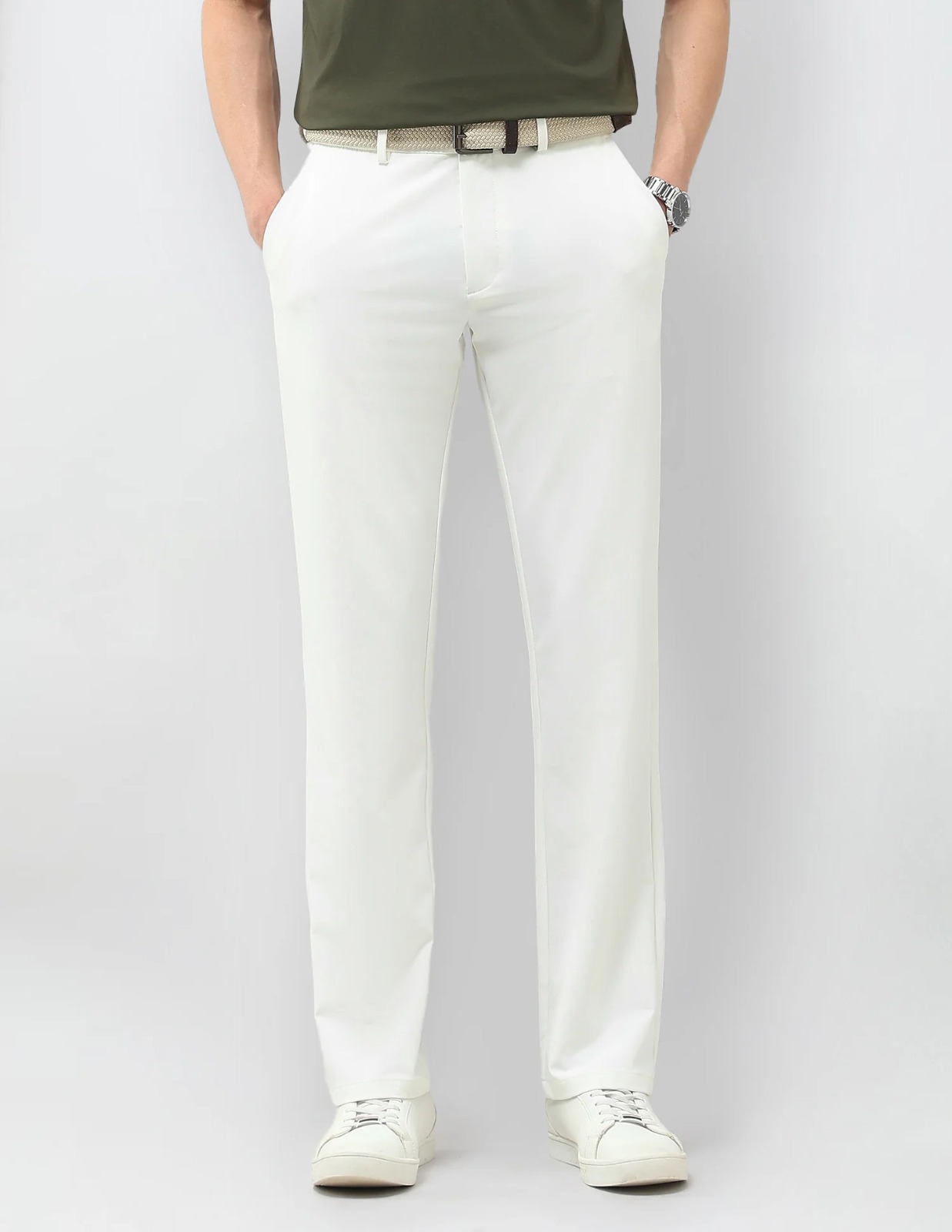
Man in white trousers and white sneakers showing trouser length and break at the shoe

Detail 08 · ×3.2Where the hem meets the shoe. Here the trouser rests on the top of the trainer with very little fold — close to no break.

Plate 01 — White trousers, wornStraight leg, hem resting on the shoe
§ 02Front elevation · DWG FE-03

Nine dimensions,
one drawing.

Select a dimension in the index — or a numbered marker on the drawing — to open its reading notes. Each sheet explains the dimension, how to check it in three positions, the signs of too tight and too loose, and how it affects the dimensions around it.

Technical drawing of a pair of formal trousers, front view, with numbered dimension lines for waist, rise, seat, thigh, knee, leg opening, length, break and silhouette 01 02 03 04 05 06 07 08 09 WAIST RISE LENGTH
DWG FE-03 — Front elevationFine line · not to scale
Dimension 01 / 09

Waist

The circumference at the top of the trouser, where the waistband sits. Everything below hangs from it: if the waist is wrong, the rise, the seat and the crease are all suspended from the wrong place.

Standing

The waistband lies flat all the way round and sits level from front to back. Turn sideways — it should not dip at the back or climb at the front. It should stay up without a belt doing the work.

Sitting

A little firmness is normal when seated; digging in, or the top edge folding over, is not. The fly and button should stay flat.

Walking

The trousers stay where you put them. If you find yourself hitching them up every few steps, the waist is too loose or sitting in the wrong place.

Too tight / short

  • Strain lines radiating from the button and fly
  • The top of the waistband rolling over
  • Side pockets pulled open

Too loose / long

  • Gathered folds when a belt is tightened
  • A gap at the centre back
  • The trousers slipping down onto the hips
Dimension 02 / 09

Rise

The distance from the crotch seam to the top of the waistband, at the front and the back. It decides where the trouser sits — nearer the natural waist with a higher rise, lower on the hips with a shorter one.

Standing

From the side, the waistband sits where the trouser was cut to sit and the crotch neither hangs low nor presses upward.

Sitting

The decisive test. A rise that is too short pulls the back of the waistband down and the front into the stomach, and the shirt starts to untuck.

Walking

Take a full stride. A crotch that hangs too low restricts the step; one that is too short presses with every step.

Too tight / short

  • Pressure at the crotch
  • Curved "smile" creases at the front
  • The back waistband dropping when seated

Too loose / long

  • Fabric bunching below the fly
  • A low crotch that shortens the visual leg
  • Loose folds between the legs
Dimension 03 / 09

Seat

The cloth over the hips and buttocks — the fullest part of the lower body. Seat room is what allows you to sit, bend and climb stairs without the trousers resisting.

Standing

Use a second mirror or a photograph to see the back. The cloth should follow the curve smoothly and fall straight from the fullest point towards the back of the thigh.

Sitting

No tension along the seat seam, and the back pockets should not be dragged open.

Walking

The back panel moves with you instead of visibly gripping and releasing on each step.

Too tight / short

  • Horizontal pull lines across the seat
  • Back pockets pulled open
  • Side seams dragged backwards

Too loose / long

  • Slack cloth collecting below the seat
  • Vertical folds at the back
  • A drooping outline from the side
Dimension 04 / 09

Thigh

The width of the leg just below the crotch. It governs comfort when sitting and walking, and the visual weight of the upper leg.

Standing

The cloth hangs from the hip rather than clinging; the outline of the thigh muscle should not show.

Sitting

The thigh spreads when you sit. There should be room for that without the fabric drawing tight across the lap.

Walking

Take a high step, as if climbing stairs. If the cloth grips the thigh and does not release, the cut is too slim for you.

Too tight / short

  • Horizontal lines across the front of the thigh
  • Side pockets flaring open
  • Fabric riding up and sticking

Too loose / long

  • Cloth flapping as you walk
  • Ripples down the inseam
  • A soft, undefined upper leg
Dimension 05 / 09

Knee

The width of the leg at knee level — the hinge between upper and lower leg, and the point that controls how sharply the leg tapers.

Standing

The crease passes straight over the knee and the fabric does not outline the kneecap.

Sitting

The knee bends furthest. The cloth should accommodate it without feeling restrictive or pulling the hem far up the shin.

Walking

Fabric swings clear of the knee rather than catching on it with each step.

Too tight / short

  • The kneecap visible through the cloth
  • Fabric bagging at the knee after sitting
  • The leg riding up when seated

Too loose / long

  • The lower leg ballooning when the opening is narrow
  • Fabric collapsing into folds at the shin
Dimension 06 / 09

Leg opening

The width of the hem at the bottom of each leg. It decides how the trouser meets the shoe and how the whole line ends.

Standing

From the front, the hem covers a good part of the shoe; from the side, check whether it sits cleanly against the heel.

Sitting

Narrow openings ride further up the leg, exposing more sock and ankle.

Walking

A very wide opening flaps; a very narrow one can catch on the back of the shoe and be pushed into folds.

Too tight / short

  • The hem catching on the heel
  • Folds forming as the hem rests on the shoe
  • Shoes looking bulky by comparison

Too loose / long

  • The hem swallowing the shoe
  • The back of the hem dragging on the ground
  • A heavy, wide-based line
Dimension 07 / 09

Length

How far the trouser reaches. It can only be judged on the body, standing, wearing the shoes you plan to wear with it — not read off a label.

Standing

At the front, the hem meets the top of the shoe. At the back, it reaches down towards where the heel meets the upper.

Sitting

Every trouser rises when you sit — that is normal. Check that the amount of sock showing is acceptable to you.

Walking

The hem should not drag on the ground at the back, nor flick up clear of the shoe with each step.

Too tight / short

  • The hem hovering above the shoe
  • Sock visible while standing
  • A cropped look you did not intend

Too loose / long

  • Fabric stacking or puddling at the shoe
  • The hem dragging and wearing at the heel
Dimension 08 / 09

Break

The fold that forms at the front of the trouser where the hem rests on the shoe. Usually described as no break, a slight break or a full break.

Standing

Look at the front of the leg just above the shoe: a single soft dent, one deeper fold, or a clean uninterrupted line.

Sitting

After you stand up, give the trousers a moment. The break should settle back into the same place rather than staying caught on the shoe.

Walking

A clean break keeps the crease running into the hem; excess fabric folds and unfolds with every step.

Too tight / short

  • No break with a short length: the hem bounces above the shoe
  • The ankle shows when standing

Too loose / long

  • Several stacked folds
  • The crease broken at the shin
  • The shoe disappearing under cloth
Dimension 09 / 09

Silhouette

The outline of the whole trouser, front and side — the sum of the eight dimensions before it. It is what people see first and what they remember.

Standing

Step back from the mirror until you can see your whole body. Look for one continuous line from hip to hem, from the front and from the side.

Sitting

Sitting changes the outline; check that nothing becomes extreme — no straining seat, no tight lap, no hem halfway up the shin.

Walking

After each step, the trousers should fall back into line rather than staying creased or stuck to the leg.

Too tight / short

  • The outline of the body showing through
  • Pull lines appearing with every movement

Too loose / long

  • A shapeless outline
  • The leg line disappearing in cloth
Note

This guide is deliberately free of measurement standards and size charts. Patterns differ from one maker to the next, and two people with the same waist size can need very different trousers. Use the dimensions as a way of looking, and judge fit by trying trousers on. For how fit and silhouette define each trouser form, see the Trouser Collection.

§ 03Observation plates

Reading a trouser laid flat.

Before trying a pair on, a flat view already tells you a great deal about its proportions. The four reference plates below are marked at the same four levels — waistband, crotch, knee and hem — so the shape between them can be compared. The levels are drawn by eye; they are a reading aid, not measurements.

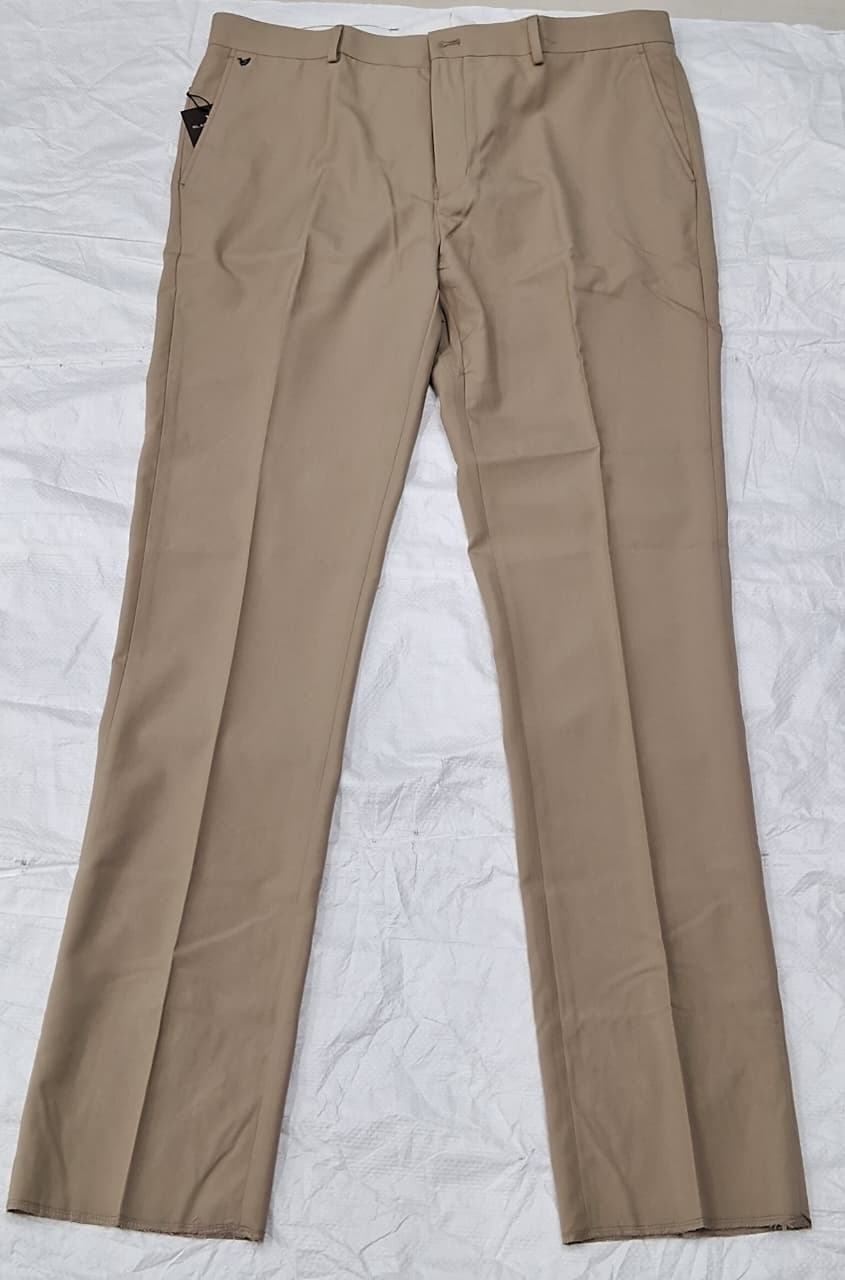
Plate 02

Leg line

Camel men's formal trousers laid flat showing the full leg line
Camel trousers, front viewLevels by eye

A long, even leg with pressed creases running from the waistband to the hem. Notice how little the width changes between knee and hem: this is the calm, unbroken line most people mean by a classic formal trouser.

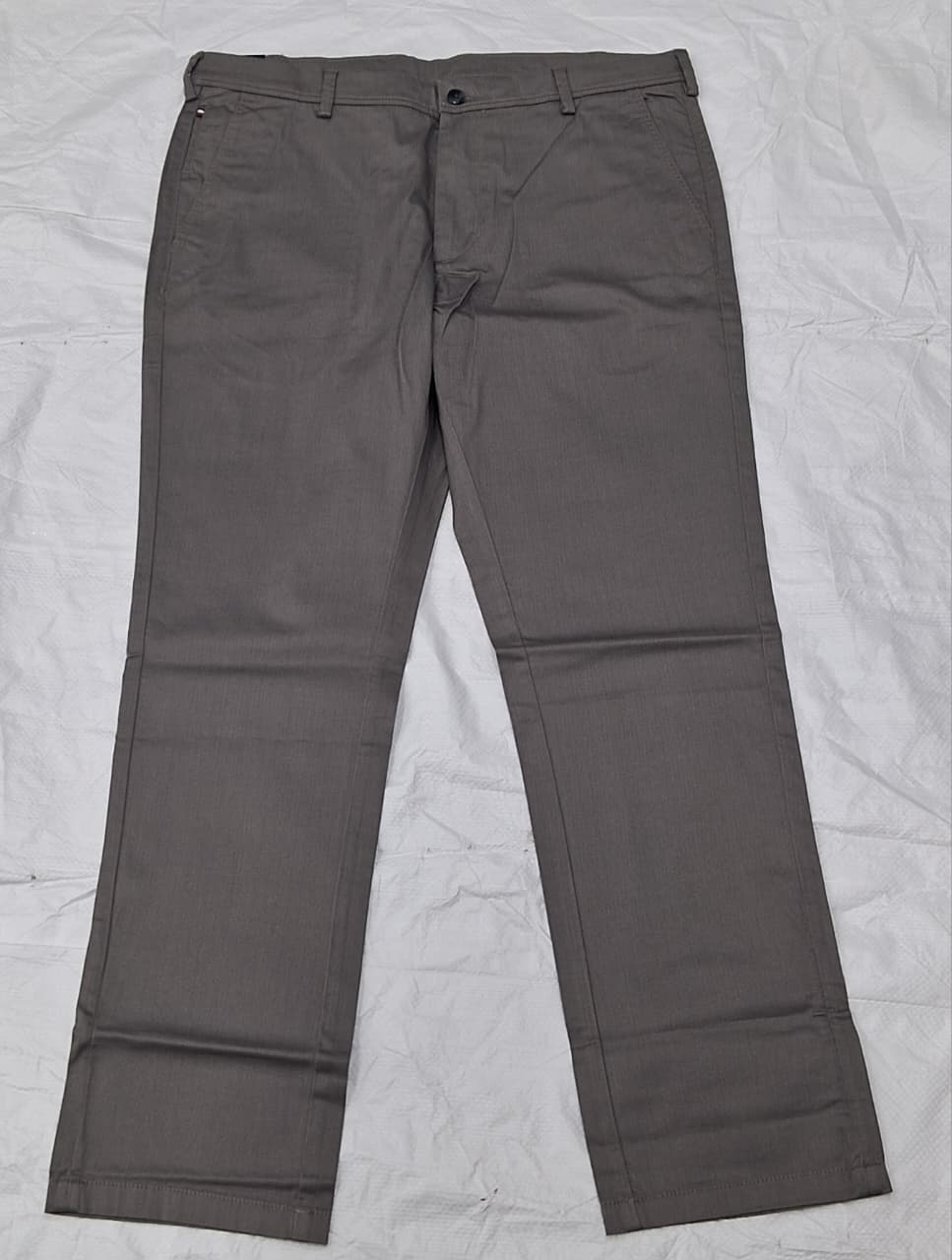
Plate 03

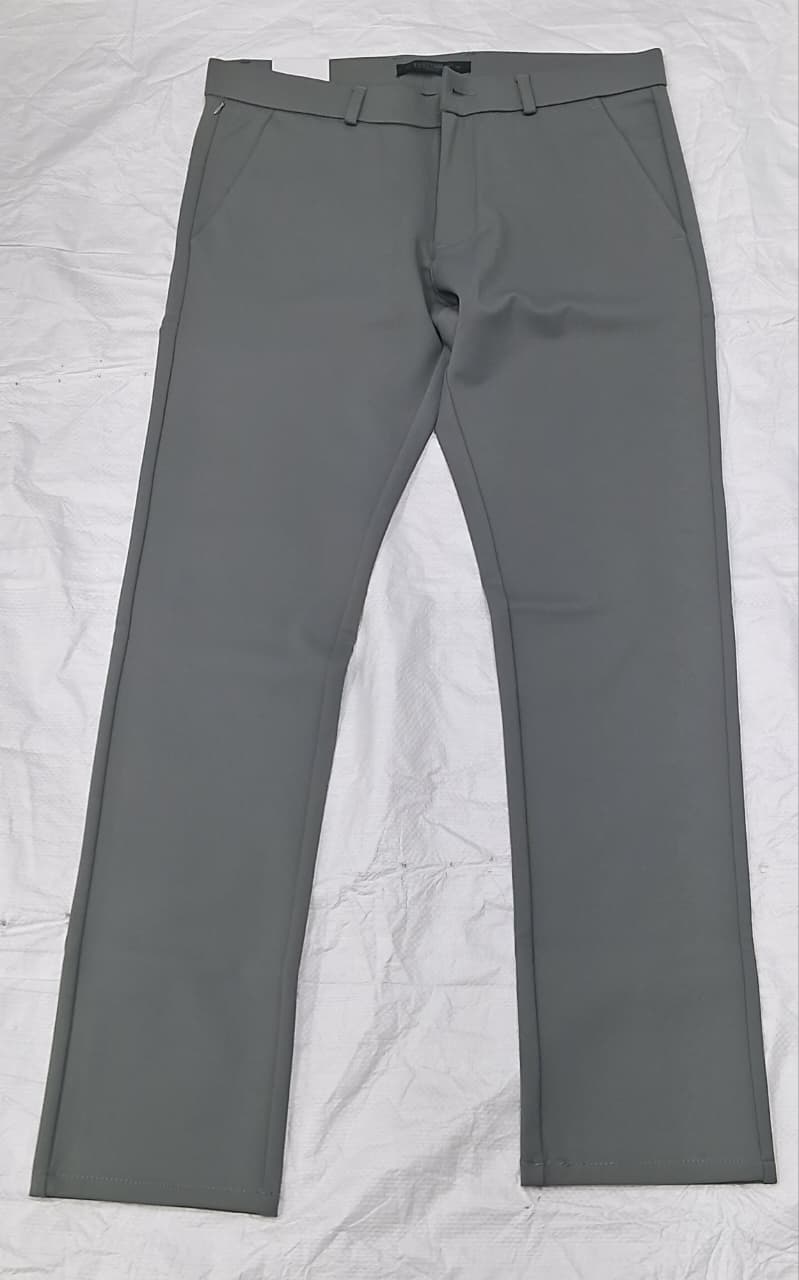
Seat & thigh

Graphite grey men's trousers laid flat showing seat and thigh volume
Graphite trousers, front viewLevels by eye

Compare the width of the upper leg with the knee below it. A fuller thigh like this gives room to sit and move, and asks for a straighter leg below so that the proportions step down evenly.

Plate 04

Leg opening

Sage grey men's trousers laid flat showing the taper to the leg opening
Sage grey trousers, front viewLevels by eye

Follow the outer edge of each leg from the knee down. The narrowing towards the hem is the taper; how far it goes decides how the trouser will meet the shoe and how much break it will form.

Plate 05

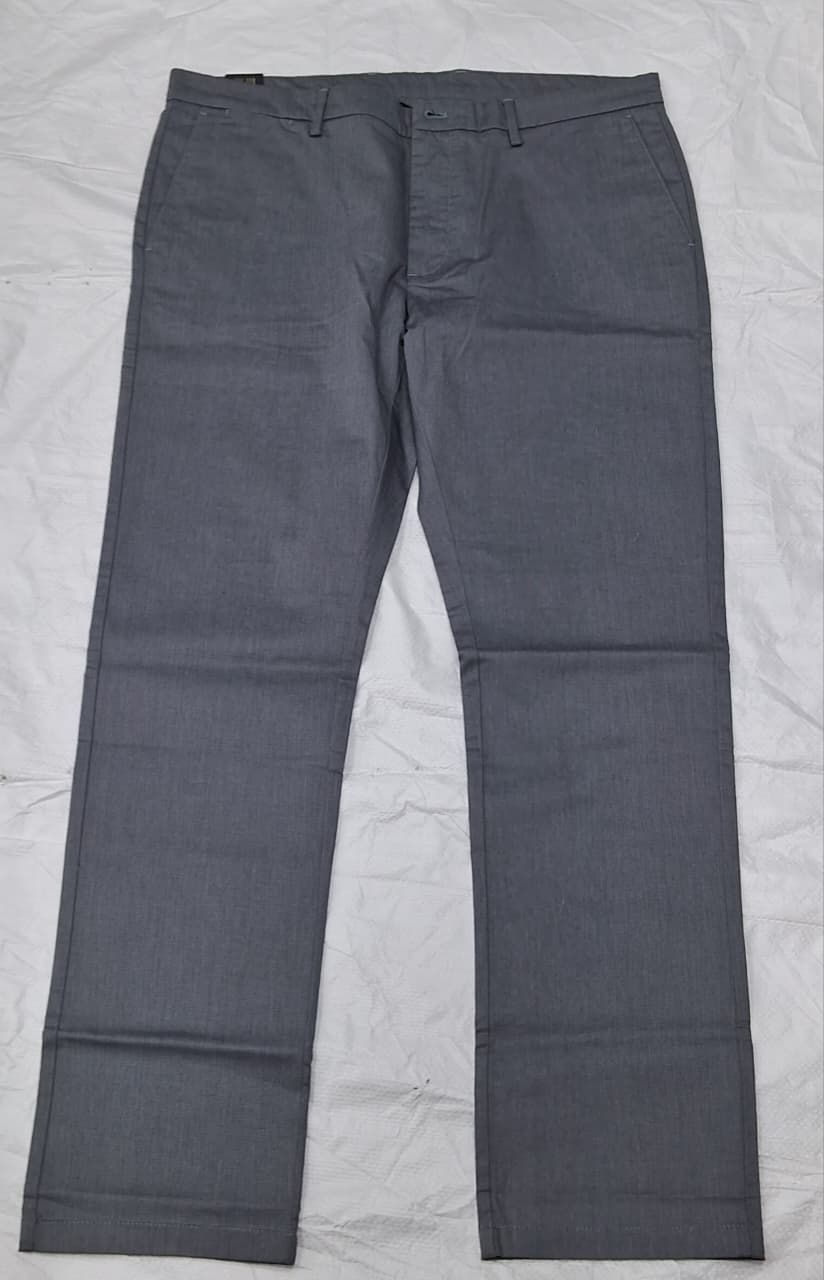
Rise

Blue-grey men's trousers laid flat showing rise and waistband
Blue-grey trousers, front viewLevels by eye

The span between the waistband and the crotch point is the front rise. Read it against the overall length of the leg: it is what decides where these trousers would sit on the body.

§ 04Diagnostics

Common fit problems, decoded.

Cloth records every point of strain. Folds and pull lines point towards the problem: lines that radiate outwards usually mean too little room, slack folds that hang usually mean too much. Read what you see, then use the third column to decide what to try next — a different size, a different cut or a different trouser form.

Common trouser fit problems: what you see, what it indicates and what to look for instead
No.What you seeWhat it usually indicatesWhat to look for instead
F.01 Side pockets flaring open The hip or upper thigh is too tight, so the cloth pulls the pocket edge apart. Overfilled pockets do the same. More room at hip and thigh — a straight or regular cut, or the next size if the waist allows. Empty the pockets and look again.
F.02 Horizontal pulls across the seat Too little seat room for the shape of the hips. A cut with a fuller seat. Sizing up for the seat may then need a waist that can be taken in.
F.03 "Smile" creases at the crotch Curved lines fanning from the crotch at the front: the rise is too short, or the upper thigh is too tight. A longer rise or a roomier thigh. Check whether the trouser is being worn lower than it was cut to sit.
F.04 Bagging under the seat Surplus cloth below the seat — the pattern allows more seat than the body fills. A slimmer seat in a different cut, or a smaller size if waist and thigh allow it.
F.05 Vertical folds below the fly Excess fabric at the front: the rise is long for you, or the front is cut with more volume than needed. A shorter rise, or a flat-front cut in place of pleats.
F.06 Puddling at the hem Too much length, often combined with a wide leg opening. The cloth stacks on the shoe in several folds. Less length. Hem length is the dimension most commonly adjusted on trousers — try the pair with your own shoes before deciding.
F.07 High-water hems Too little length — or a trouser being worn higher than it was cut to sit. More length. Check the waist position first: the same pair worn at its intended height may reach the shoe.
F.08 Crease that twists The crease spirals towards the inseam or outseam. Common causes are a leg cut slightly off the grain of the cloth, an uneven pressing line, or the way you stand. Re-press along the true centre of the leg. If the twist returns in several different trousers, it is likely to be stance rather than the garment.
F.09 Waistband gaping at the back The waist is large relative to the seat; the back of the band stands away from the body. A cut with a different waist-to-seat balance. Traditionally tailored trousers often have a split back waistband, made so that the back can be adjusted.
F.10 Kneecap showing, bagging after sitting The knee is narrow for the leg, or the cloth recovers slowly after being stretched. A wider knee or a straighter leg; a fabric with more body or recovery.
F.11 Waistband rolling over The waist is tight, or the rise is too low for where the body is fullest. A larger waist or a higher rise that sits above, rather than across, the fullest point.
F.12 Diagonal drag lines towards the crotch Tension running from the knee towards the inseam — usually thigh or seat tightness. More room in the thigh and seat; a straight or regular cut.
Note

These are general patterns, not a diagnosis. Fabric, posture and how full the pockets are all change what you see. This website is a guide, not a fitting or alteration service: the table is here to help you judge a pair for yourself when you try it on.

§ 05Proportion studies

The same body,
three leg lines.

Cut names are not standardised, but most men's formal trousers fall into three broad leg shapes. None is correct in itself — each changes the apparent proportions of the person wearing it. These are tendencies to look for in the mirror, not rules.

P.01

Slim fit formal pants

Close through the thigh with a clear taper from knee to hem.

Slender build
Follows the leg closely and looks deliberate and modern.
Athletic thighs
Often strains at the thigh before it fits the waist — check pockets and seat carefully.
Fuller build
Can emphasise width at the hip because the leg narrows sharply below it.
Shorter stature
A clean, narrow line with little or no break can make the leg look longer.
P.02

Straight fit trousers

Similar width from knee to hem; the leg falls in a vertical line.

Slender build
Reads as classic and composed, with a little more ease than a slim cut.
Athletic thighs
Usually the easiest shape: thigh room without a wide hem.
Fuller build
Balances the hip with the hem, so the leg looks continuous.
Shorter stature
Works well with a slight break; avoid excess length.
P.03

Regular fit formal pants

More room through seat and thigh, with a moderate, wider leg.

Slender build
Can look generous; a sharp crease helps hold the line.
Athletic thighs
Comfortable to sit and move in, especially for long days.
Fuller build
Gives the cloth room to hang instead of cling, which looks neater.
Shorter stature
Keep the break slight — width plus length shortens the leg visually.

Choosing the break

Break is a style decision as much as a fit one. The pressed front crease — common on men's trousers since around the turn of the twentieth century — reads best when it runs uninterrupted into the hem, which is why tailoring has long favoured restraint at the shoe. Choose the break to suit the leg opening and the shoe, then keep it consistent across your office trousers so that each pair reads the same with your shoes.

  1. No break

    The hem just touches the top of the shoe. Crisp and modern; suits slim, tapered legs and lighter shoes. Shows the ankle when you walk or sit.

  2. Slight break

    A single soft dent at the front. The most versatile choice for formal pants for office wear: tidy standing, covered when walking.

  3. Full break

    One deeper fold across the front, hem reaching further down the heel. Traditional; suits wider straight or regular legs.

§ 06Procedure

A protocol for trying trousers on.

The label narrows the search; the mirror decides. Trying trousers on in a deliberate order makes it far easier to compare one pair with the next and to spot which dimension is wrong.

If you are searching for formal pants near me around Juhu and Vile Parle West in Mumbai, Options Mall is at Vile Parle Shopping Centre — the contact sheet has the address and directions. To understand what you are looking at once a pair is on, the construction guide explains waistbands, pockets and hems, and the material library explains how different formal trouser fabrics drape.

  1. P.01

    Dress for the test

    Wear, or bring, the kind of shoes and belt you will wear with the trousers, and a tucked shirt. Length and break cannot be judged in socks.

  2. P.02

    Set the waist first

    Fasten the trousers where they were cut to sit, not where they happen to fall. Every other reading depends on this one.

  3. P.03

    Stand naturally — front, side, back

    Relax your posture instead of standing to attention. Check the waistband, the crease line and the hem from all three views, using a second mirror for the back.

  4. P.04

    Hands in pockets

    Put your hands in the side pockets. If they flare or gape, the hip and thigh are too tight.

  5. P.05

    Sit for a full minute

    Check the back waistband, the pressure at the crotch and how much the hem rises. Then stand and watch whether the cloth settles back.

  6. P.06

    Walk, step and bend

    Take long strides, lift a knee as if climbing stairs and bend as if picking something up. Look for grip at the thigh and seat.

  7. P.07

    Read the silhouette from a distance

    Step back until you can see your whole body. Judge the line from hip to hem as one shape — and alongside the jacket you would wear with it.

  8. P.08

    Compare like with like

    Try a second size or cut straight after the first. Fit is easier to read by comparison than in isolation.

04ConstructionNext sheet →